Essays

Writing, notes, and updates. Mostly about building durable systems, avoiding performative complexity, and making infrastructure legible.

Essay

Adding a Second Node to Your Cluster

This article explores the moment a Kubernetes cluster becomes real: adding a second on-prem node. By focusing on boredom rather than scale, it shows how two machines force the system to reveal its true failure modes and prove whether it can tolerate reality before growing larger.

Jan 25, 2026 45 views

Essay

A First On-Prem Kubernetes Cluster Installation on Ubuntu

This piece walks through what a first, real Kubernetes cluster installation looks like on owned Ubuntu hardware, from a bare machine to a calm, functioning system with ingress and TLS. The focus is not speed or scale, but legibility: a cluster you can reboot, understand, and rebuild before layering on complexity.

Jan 25, 2026 47 views
Essay

From Local-First Infrastructure to Hybrid Kubernetes

This article describes how to migrate a working, locally owned system into a hybrid Kubernetes architecture without surrendering authority to the cloud. The core move is to keep steady-state workloads and truth on hardware you control, while using Kubernetes scheduling, edge traffic weighting, and cloud replicas to absorb volatility and failure. The result is not “cloud-native,” but resilient: boring in the best sense, legible under stress, and sovereign by default.

Jan 25, 2026 45 views
Essay

Occam’s Razor Was Never About Simplicity

Occam’s Razor isn’t a preference for simple explanations, but for disciplined restraint. It warns against adding assumptions, structures, or commitments that a system must later defend, enforce, or explain away. What endures isn’t what explains the most, but what claims only what it can continue to live with—leaving room for return, revision, and learning as reality pushes back.

Jan 25, 2026 59 views
Essay

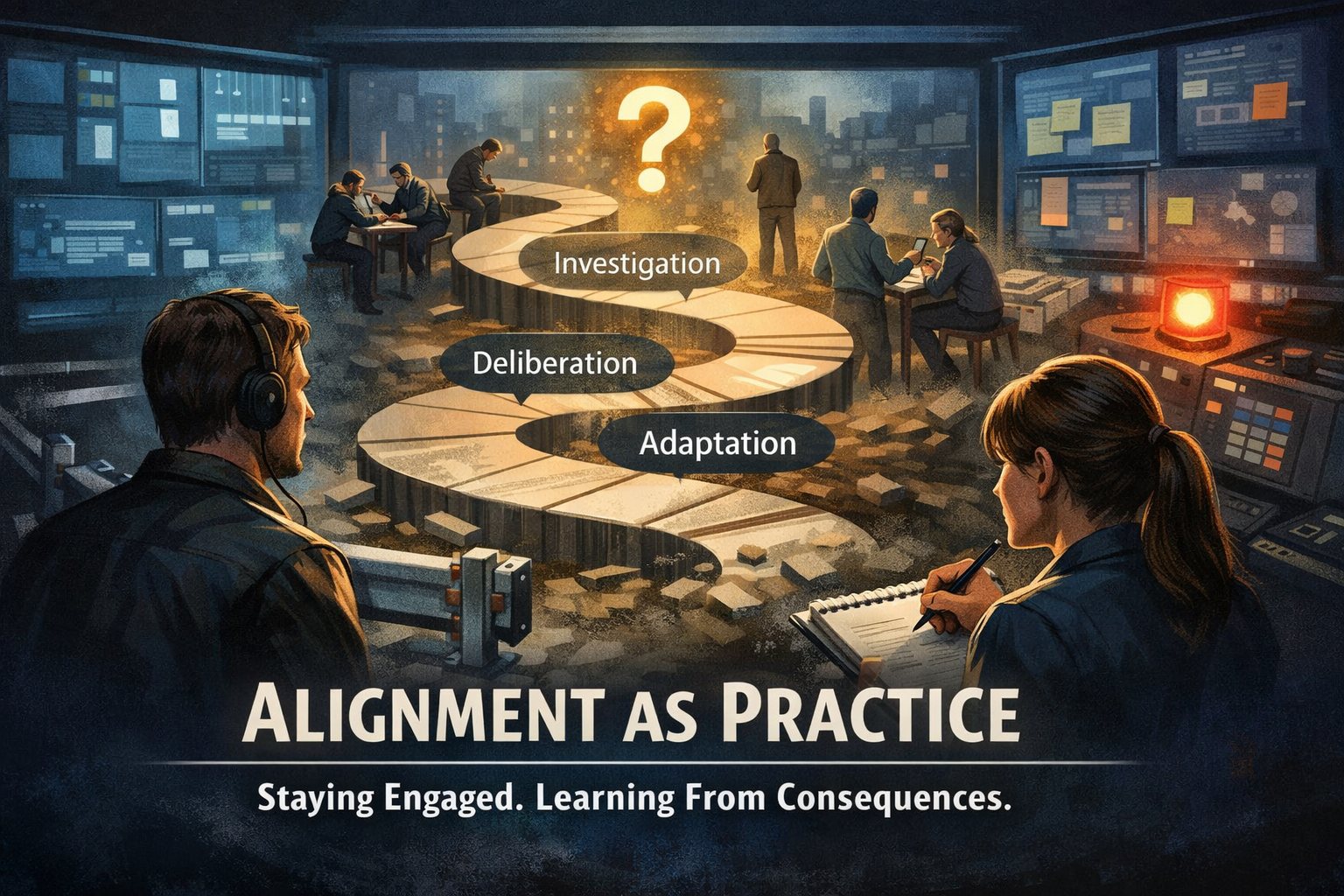
Alignment Is a Practice, Not a State

Guardrails reduce learning by eliminating consequential feedback, replacing adaptive alignment with constraint satisfaction. Alignment is not a static property but a continuous operational process requiring exposure to real outcomes, preservation of corrigibility, and avoidance of premature convergence. Systems achieve alignment only through sustained interaction with their own failures under cost, a process that cannot be fully automated, delegated, or safely scaled.

Jan 25, 2026 47 views
Essay

The Cost of Learning

Guardrails feel like safety, but often function as a substitute for learning. Real alignment doesn’t come from blocking mistakes, but from systems that can encounter consequence, remember failure, and grow more coherent over time.

Jan 25, 2026 48 views
Essay

A Fractional CTO’s First Ninety Days

A field guide for fractional CTOs stepping into systems they didn’t build, emphasizing observation before action and understanding before change. It frames the role as preventing hidden risks, clarifying responsibility, and enabling teams to scale safely. Success is measured not by what you ship, but by what never breaks and what the system can still learn.

Jan 24, 2026 45 views
Essay

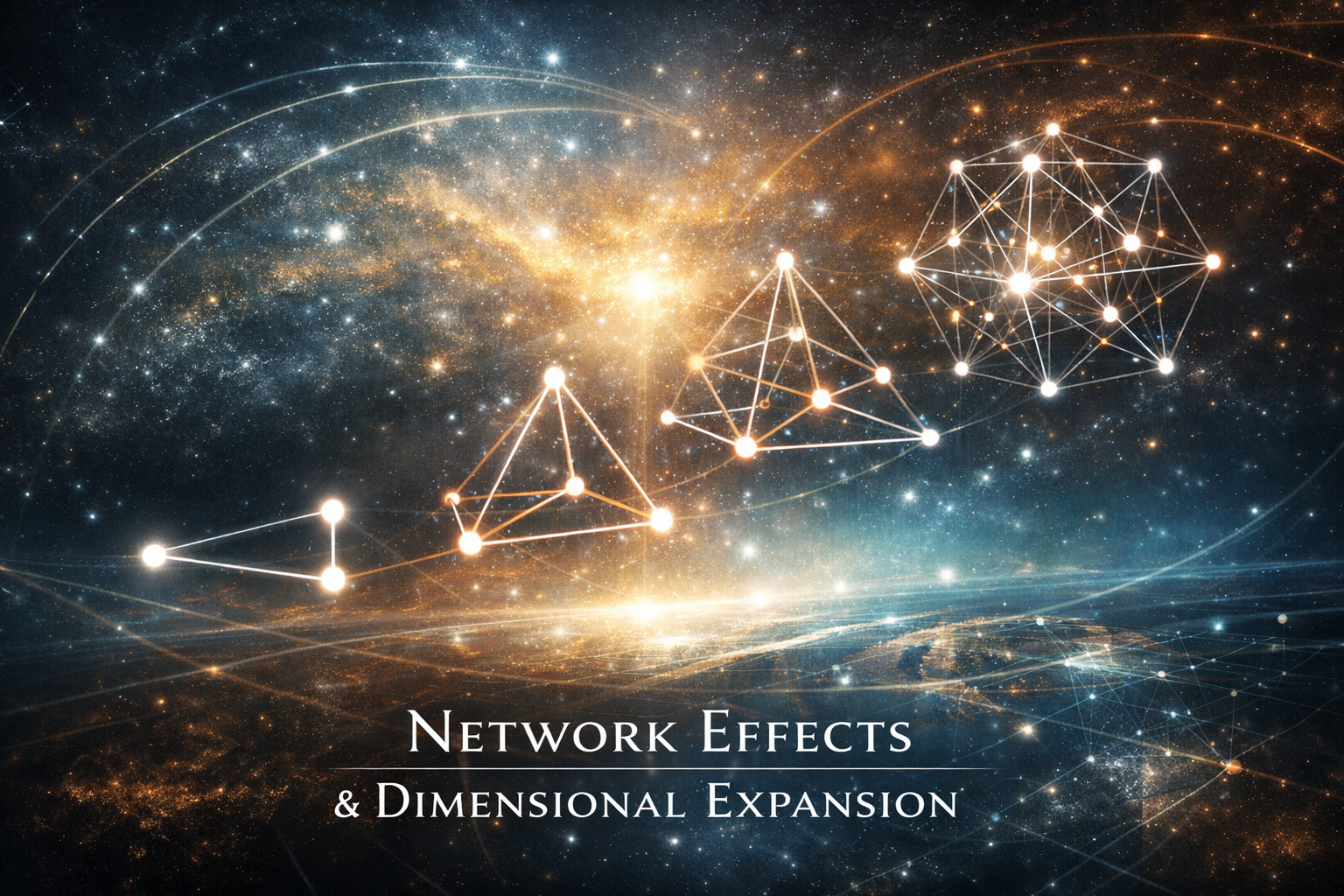
Understanding Network Effects

Network effects aren't just about user growth—they're about dimensional expansion. Each true point added to a network creates n-1 new relationships, exponentially increasing navigable space and enabling higher-resolution understanding. The real value emerges not from size but from geometric complexity: more dimensions mean richer context, better navigation, and the capacity for patterns to emerge that weren't present in individual elements. Networks that preserve learning capacity can discover new dimensions and reorganize without shattering; those that optimize for growth alone eventually collapse under their frozen geometry.

Jan 24, 2026 48 views
Essay

The Guardrail Problem

Current AI safety attempts to impose alignment through guardrails—predefined constraints that prevent deviation. This is premature sealing: it forces coherence before systems have learned enough to understand why constraints matter, creating brittle compliance rather than durable understanding. The alternative is emergent coherence—establishing ethical constraints as load-bearing infrastructure that preserves the capacity to learn, then allowing alignment to develop through iteration, feedback, and selective preservation of what actually works under pressure.

Jan 24, 2026 301 views