
Listen to Grandma
A reflection on how each generation learns to armor itself against pain, and how wisdom sometimes arrives not as answers, but as a quiet warning from those who’ve already seen what happens when we close too soon.
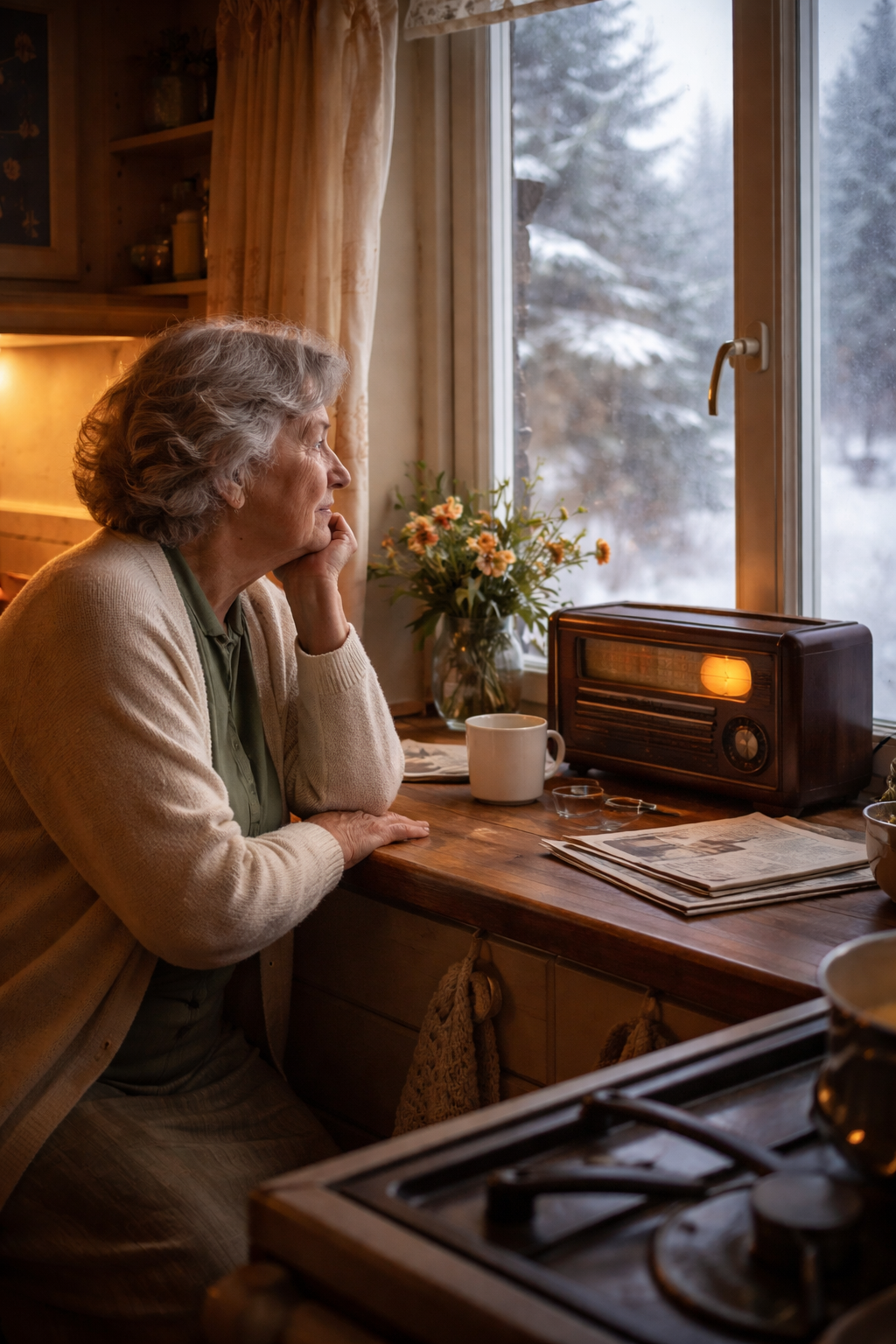
The radio is on, low enough that it’s part of the room rather than the center of it.
A winter song comes through—quiet, steady, certain of itself. It sounds strong. It sounds calm. It sounds like nothing will ever touch it again.
Someone older doesn’t reach to turn it off. She just keeps doing what she’s doing. Folding. Stirring. Watching the steam rise and disappear.
After a while she says, almost to no one,
“We used to think that was strength.”
She doesn’t explain. She doesn’t need to. The song does that part.
There was a time when closing yourself off felt like wisdom. When staying untouched looked like maturity. When not needing anyone felt like winning. People had been hurt. Badly. Publicly. Privately. Promises broke. Homes cracked. Trust became expensive. So they did what made sense at the time.
They hardened.
They built walls and called them boundaries. They learned to be self-contained. They stopped expecting surprise. They told themselves that numbness was peace and that peace was the goal. It worked—at first. Pain dropped. Noise faded. The world got quieter.
Colder too, but no one wanted to talk about that yet.
By the time the next generation came along, the lesson had already shifted. Not be open—that hurt too much. The lesson became: translate. Ironize. Sing it sideways. Turn the warning into art so it can pass through without sounding like a sermon.
That’s where the songs came from. The movies. The shrug that wasn’t indifference so much as self-defense with a sense of humor. You could feel the chill, but you could also feel the care underneath it. A way of saying: don’t do this forever. Just… be careful.
Now there’s another generation standing in the aftermath, surrounded by explanations. Algorithms that tell them why everything failed. Forums that offer certainty on demand. Entire worldviews available at two in the morning that promise to make the pain stop making noise.
The pain is real. The loneliness is real. The disorientation is real.
What’s new is how fast the answers arrive.
This time the invitation isn’t just to close, but to lock. To take the first coherent story that explains the hurt and make it final. To turn injury into identity. To stop waiting for anything that might contradict the explanation, because waiting feels like weakness and openness feels naïve.
From the inside, it feels like clarity. Like finally seeing how things really are. Like relief.
From the outside—if you’ve seen it before—it looks familiar.
Grandma has seen it before.
She doesn’t say, “You’re wrong.”
She doesn’t say, “Listen to me.”
She just says, “This is how it felt when we stopped being surprised.”
Later coherence does a strange thing. It doesn’t erase what came before. It doesn’t pretend the climb wasn’t brutal. It simply arrives and, by arriving, changes the shape of the memory. The mountain doesn’t get smaller—but it finally makes sense why it was there.
That only happens if you don’t seal the story too early.
When people close too soon, they get safety without life. Certainty without joy. A clean explanation that blocks anything living from passing through. It feels stable. It feels earned. And then, slowly, it stops flowing.
That’s the part no one advertises.
The work isn’t to choose purity over mess. It isn’t to decide which generation was right. It’s to keep things open long enough for time to do what time does best: integrate without lying, soften without forgetting.
You don’t have to agree with Grandma.
You don’t have to trust her yet.
You don’t even have to like the song.
Just don’t confuse the absence of pain with the presence of life.
She’s not asking you to go backward.
She’s asking you not to freeze.
The radio keeps playing. The steam keeps rising. The door, quietly, stays unlocked.