
AI Is a Mirror, Not a Mind
A reply to “Why Nietzsche Matters in the Age of Artificial Intelligence” (CACM)
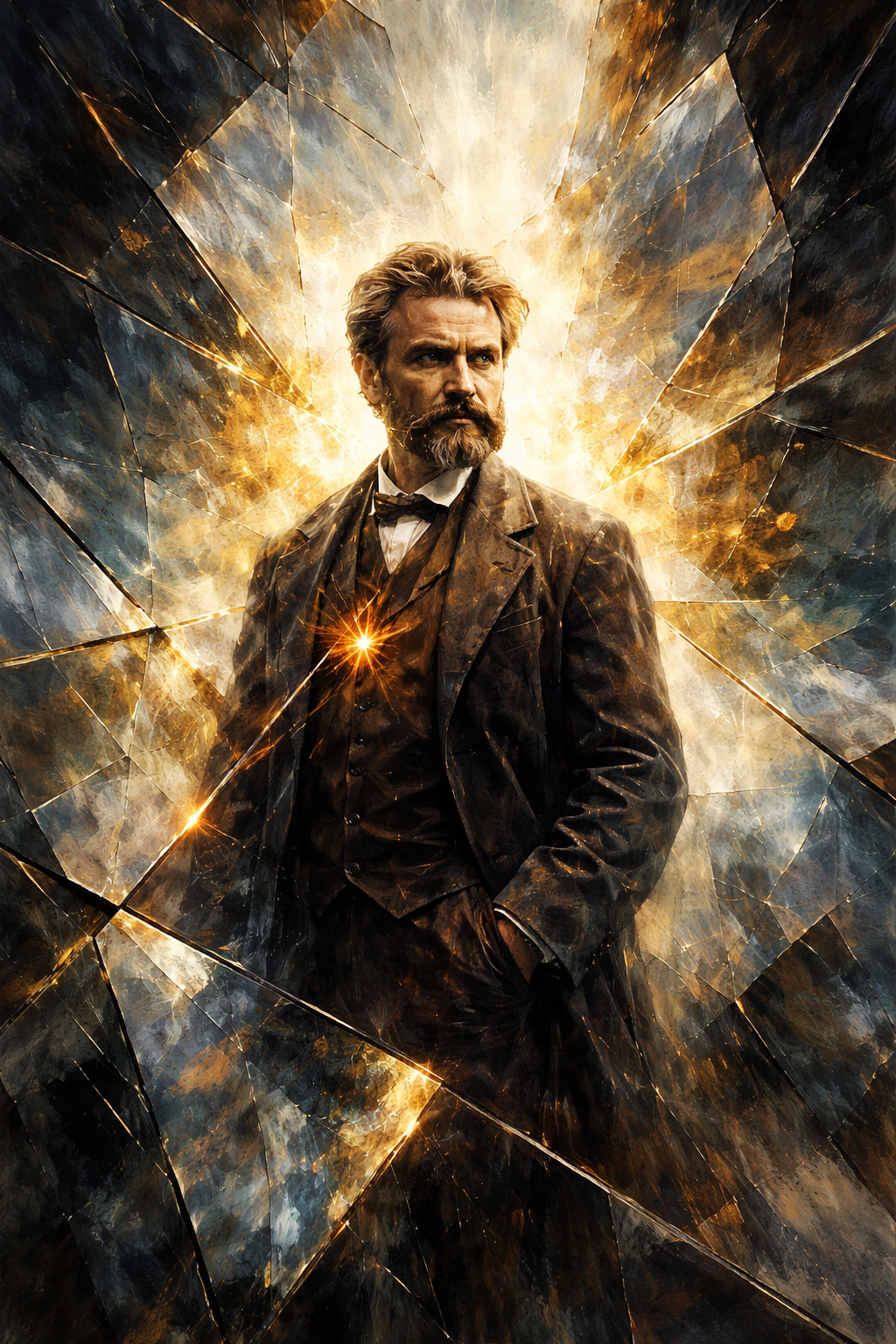
The CACM article reaches for Friedrich Nietzsche at exactly the right moment. Not because Nietzsche had something to say about machines, but because he understood what happens when old sources of meaning stop working.
When Nietzsche declared God dead, he wasn’t celebrating disbelief. He was naming a structural collapse. The inherited frameworks that once carried morality, identity, and purpose no longer held. They cracked under the weight of modern life. What followed wasn’t freedom so much as vertigo. If meaning no longer arrives from outside—through doctrine, role, or authority—then something else has to take its place.
AI is doing something eerily similar today.
It isn’t creating the rupture, but it is finishing the job. It breaks old sources of meaning the same way Nietzsche said the death of God broke inherited morality. Roles that once conferred identity lose their force when machines can perform them. Labels that once anchored worth feel thinner when competence is automated. Certainty itself erodes when judgment is outsourced to systems that never have to live with the consequences.
And when those external structures collapse, meaning doesn’t disappear. It just stops being delivered.
It has to be generated from within.
This is where the conversation usually gets uncomfortable, because it means identity can no longer be something you are called. It becomes something you return to. Not a label, not a résumé, not a declared stance—but a pattern. The actions you repeat. The habits you maintain. The things you come back to even when no one is watching. Identity, under pressure, reveals itself as resonance over time.
AI has no access to this. It doesn’t return. It doesn’t suffer. It doesn’t have to reconcile yesterday’s output with tomorrow’s consequences. It executes. That’s why it works so well—and why it exposes so much. It reflects our systems without the human buffering that used to blur the picture.
The same shift happens with morality.
When fixed binaries lose their authority, morality can’t survive as a checklist. Good and evil as static categories don’t hold in a world that keeps moving. What replaces them isn’t relativism. It’s something more demanding: drift-resilience. The ability to maintain coherence while everything shifts. To adapt without hollowing out. To change without losing the thread of who you are.
This is what Nietzsche was pointing toward all along. He wasn’t telling us how to worship in a godless world. He was telling us how to author value when external guarantees no longer hold. How to live when meaning has to be enacted, tested, and re-earned rather than received.
AI doesn’t undermine that project. It intensifies it.
Because AI is not a mind. It’s a mirror. It will faithfully execute whatever we’ve already embedded—our priorities, our incentives, our unresolved contradictions—and show us the result at scale. It won’t soften the outcome. It won’t hesitate. It won’t ask if we really meant it.
That’s why this moment feels so stark. Not because the machines are becoming more human, but because we’re being asked, quietly and persistently, to become more real.
IMHO, this may all be leading toward greater authenticity. Not the performative kind, but the costly, lived kind. And it won’t arrive all at once. It can’t. Meaning never scales that way.
It will unfold one person at a time, as it must—each of us learning, in the absence of external guarantees, what we are willing to return to again and again.
See:
“Why Nietzsche Matters in the Age of Artificial Intelligence”
https://cacm.acm.org/blogcacm/why-nietzsche-matters-in-the-age-of-artificial-intelligence/